
Shahla Ghaderi to Study How Brain Inflammation Influences Alzheimer’s With a HUB Alzheimer Barcelona Fellowship
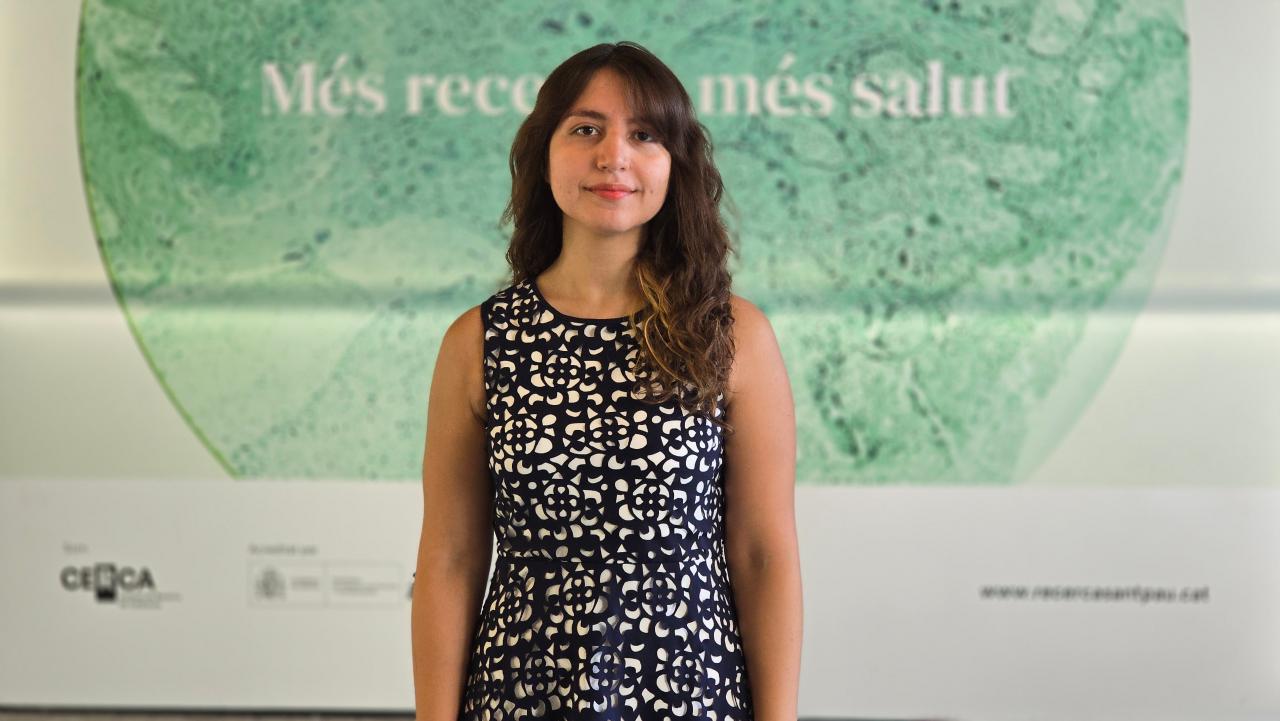
Understanding how the brain responds to inflammation in the early stages of Alzheimer’s disease is one of the major challenges currently facing dementia research. With this goal, a new doctoral thesis jointly conducted by the Sant Pau Research Institute (IR Sant Pau) and the Barcelonaβeta Brain Research Center (BBRC) will investigate the role of astroglial cells—cells in the central nervous system that are essential for maintaining balance and protecting the brain—in disease progression, thanks to one of the first collaborative fellowships awarded by the HUB Alzheimer Barcelona.
Predoctoral researcher Shahla Ghaderi will conduct the project under the supervision of Dr. Juan Fortea, a neurologist at the Memory Unit of Hospital de Sant Pau and a researcher at IR Sant Pau, and Dr. Gemma Salvadó, a researcher at the BBRC. The initiative is part of the “HUB Alzheimer Barcelona PhD Fellowships” program, launched by the Pasqual Maragall Foundation with the support of the Barcelona City Council. The program funds doctoral theses jointly conducted by leading institutions in research on Alzheimer’s disease and other dementias.
The project will examine how brain inflammation may influence the progression of Alzheimer’s disease, focusing on astrocyte activity and how this inflammatory response evolves throughout the different stages of the disease. Although Alzheimer’s research has historically focused primarily on the accumulation of amyloid-beta and tau proteins, studies recently have suggested that neuroinflammation may also play an important role in neurodegenerative progression.
The research will combine advanced biomarkers and molecular neuroimaging techniques to improve both early diagnosis and the development of new therapeutic strategies. “We are learning more and more about the importance of neuroinflammation in Alzheimer’s disease, but many questions remain about how this process evolves during the early stages of the disease. This project seeks to deepen our understanding of precisely that,” Shahla Ghaderi explains.
The research will draw on highly characterized cohorts from both institutions. At IR Sant Pau, the project will include participants from the SPIN cohort and the Down-Alzheimer Barcelona Neuroimaging Initiative (DABNI), which focuses on people with Down syndrome, a population at very high risk of developing Alzheimer’s disease. At the BBRC, the study will include participants from the ALFA+, β-AARC, and BIODEGMAR cohorts, ranging from cognitively healthy individuals at high risk of developing Alzheimer’s disease to patients with mild cognitive impairment and dementia. Combining these cohorts will make it possible to study neuroinflammation from the preclinical stages and obtain a more comprehensive understanding of the mechanisms involved in the disease.
“One of the most valuable aspects of this program is the opportunity to work collaboratively across leading institutions in Alzheimer’s research. Combining the cohorts and clinical expertise of the BBRC and IR Sant Pau offers us a unique opportunity to study the disease from complementary perspectives and with a highly translational approach,” the researcher says.
The HUB Alzheimer Barcelona collaborative fellowships aim to support the training of a new generation of researchers and foster joint projects among leading institutions in biomedical and clinical dementia research. The call funds three doctoral theses, providing up to €148,000 per project over four years. In doing so, it promotes scientific collaboration and knowledge exchange among leading centers in research on Alzheimer’s disease and other neurodegenerative conditions. Shahla Ghaderi’s thesis is one of those selected in this inaugural call.
