
Biobank
What we do
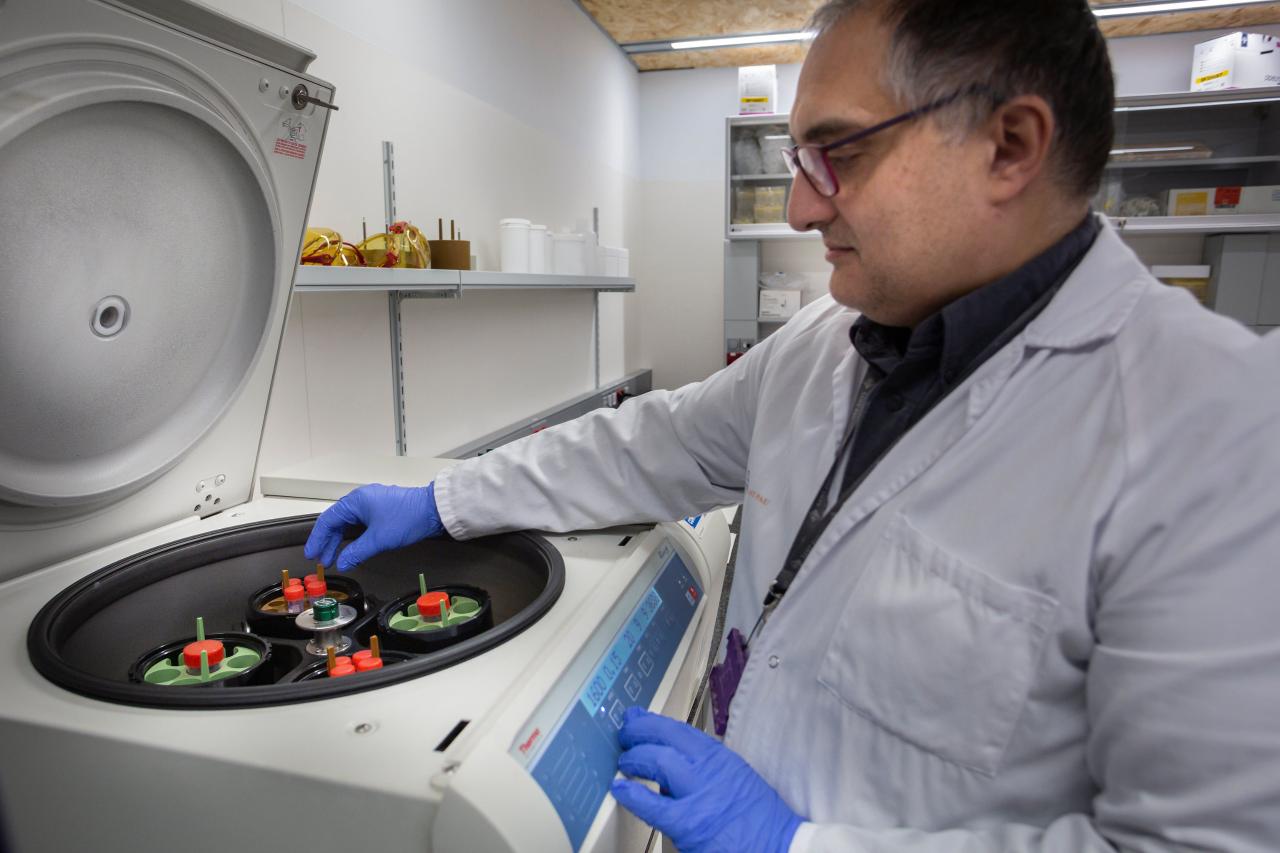
The Biobank of Sant Pau Research Institute (IR Sant Pau) is a scientific platform supporting biomedical research of public and non-profit character, whose main function is the management of human biological samples and associated clinical data, ensuring compliance with quality, ethical and legal standards established by current legislation.
The IR Sant Pau Biobank was authorized by the Health Department of the Generalitat de Catalunya in 2013 and is registered in the National Registry of Biobanks of the Instituto de Salud Carlos III (number B.0000722). In addition, the Biobank is part of the ISCIII biomodels and biobanks platform and the Catalonia Tumor Bank Network (XBTC).
Our objective:
The objective of the IR Sant Pau Biobank is to facilitate accessibility to human biological samples for the scientific community with the purpose of being used in biomedical research. The Biobank coordinates the collection, processing, conservation and distribution of human biological samples and their associated data, ensuring traceability through the use of the Noraybanks Biobank management computer system and acting as a link between sample donors, healthcare staff and the scientific community.
Who we are
The IR Sant Pau Biobank is a network biobank made up of three nodes: the central node, which manages samples derived from blood and other biological fluids, the tumor bank node, which includes mainly tumor tissue samples, and the Puigvert foundation node, which includes samples from patients with nephro-andrological pathologies.
In addition, the Sant Pau Biobank is affiliated with an External Scientific Committee (CCE) and the Clinical Research Ethics Committee for Drug Trials (CEIM) of Hospital Sant Pau.
The Biobank has a scientific direction, two node coordinators and technical staff:
Contact mail: biobanc@santpau.cat

Services
The Biobank and Immunohistochemistry Platform offers a wide portfolio of services to support biomedical research:
Sample processing and custody:
- Processing of human biological samples, such as peripheral blood and derivatives, bone marrow, urine and tissues, among others.
- Automated separation of different cell types with autoMACS® NEO Separator
- Cryopreservation of viable cells, guaranteeing their viability and traceability.
- Conservation and custody of human biological samples.
- Extraction of nucleic acids (DNA and RNA) from different types of samples.
Transfer of samples and associated data:
- Management of biological material requests for research projects.
Advice:
- Ethical and legal advice for the creation and management of new sample collections.
- Scientific-technical advice on the treatment, processing and use of biological samples.
Collections:
- Type 2 diabetes mellitus
- Collection description: Biological samples from adults diagnosed with type 2 diabetes mellitus (DM2).
- Inclusion criteria: Adults with a diagnosis of type 2 diabetes mellitus (DM2) diagnosed according to American Diabetes Association (ADA) criteria, who have signed informed consent.
- Sample types: Peripheral blood, buffy coat, plasma, serum, urine, snap frozen PBMCs and DNA from peripheral blood.
- Metabolic dysfunction-associated steatohepatitis (MASH)
- Collection description: Biological samples from people diagnosed with metabolic dysfunction-associated steatohepatitis (MASH).
- Inclusion criteria: People between 18 and 75 years old, with BMI greater than 27, diagnosed with metabolic dysfunction-associated steatohepatitis (MASH) with hepatic fibrosis grade F2–F4.
- Sample types: Peripheral blood, buffy coat, plasma, serum and urine.
- Type 1 diabetes mellitus and gestational diabetes
- Collection description: Biological samples from people diagnosed with type 1 diabetes mellitus (DM1) and pregnant women with type 1 diabetes mellitus or gestational diabetes and their children.
- Inclusion criteria: People recently diagnosed with type 1 diabetes mellitus (DM1) and pregnant women with type 1 diabetes mellitus or gestational diabetes, who sign informed consent to participate in the study. Those with pregestational diagnosis of any type of diabetes mellitus (type 1, type 2 or MODY) are excluded.
- Sample types: Peripheral blood, plasma, buffy coat, serum, urine and urine sediment fasting and postprandial. In some cases, umbilical cord blood.
- Depressive disorder
- Collection description: Samples from people with a diagnosis of major depressive episode.
- Inclusion criteria: People between 18 and 65 years old with a diagnosis of major depressive episode who sign the corresponding informed consent.
- Sample types: Peripheral blood, plasma, serum, buffy coat and PBMCs at baseline and, in some cases, at 1 and 6 weeks after diagnosis.
- Sexual dysfunction and antidepressants
- Collection description: Samples from people under antidepressant treatment with different degrees of sexual dysfunction (SD).
- Inclusion criteria: People over 18 years old who are under antidepressant treatment and present a variable incidence of sexual dysfunction (SD), including extreme and intermediate phenotypes, who have signed informed consent.
- Sample types: Peripheral blood.
- First psychotic episodes
- Collection description: Samples from people who have presented a first psychotic episode and are in clinical remission.
- Inclusion criteria: People who have experienced a first episode of psychosis, according to Andreassen criteria, currently in clinical remission, and who have signed informed consent.
- Sample types: Peripheral blood, plasma, PBMCs and neutrophils.
- Hematological neoplasms
- Collection description: Bone marrow aspirate samples from people with suspected or diagnosed hematological neoplasms, mainly acute myeloid leukemia (AML).
- Inclusion criteria: People with suspected or diagnosed hematological neoplasm who undergo a bone marrow study and sign informed consent.
- Sample types: Cryopreserved bone marrow mononuclear cells (BMMCs).
- Diffuse interstitial lung disease
- Collection description: Samples from people with diffuse interstitial lung disease.
- Inclusion criteria: People with diffuse interstitial lung disease who require a bronchoscopy as part of their diagnostic process and who sign informed consent.
- Sample types: Plasma, serum and bronchoalveolar lavage (BAL).
- Bronchial biopsies
- Collection description: Multicenter collection of bronchial biopsies from patients with asthma, healthy controls and inflammatory pathologies.
- Inclusion criteria: People aged 18 to 75 years with bronchoscopy for focal lung disease with diagnosis of asthma (asthmatic group), without asthma (bronchial mucosa control group) or with sarcoidosis or idiopathic eosinophilic bronchitis (control group with inflammatory pathology).
- Sample types: Paraffin blocks of bronchial biopsies.
- Heart failure
- Collection description: Samples from people hospitalized for heart failure with pulmonary congestion.
- Inclusion criteria: People aged 18 years or older, hospitalized in the Cardiology service for a minimum of 24 hours, with main admission for signs and/or symptoms compatible with heart failure and chest X-ray with pulmonary congestion, either in a first episode or due to decompensation of chronic heart failure.
- Sample types: Serum, plasma and peripheral blood.
- Covid
- Collection description: Samples from people with suspected or confirmed diagnosis of SARS-CoV-2.
- Inclusion criteria: People with suspected or confirmed diagnosis of SARS-CoV-2.
- Sample types: Serum, plasma and PBMCs.
- Collection description: People with tumor pathology and clinical indication for biopsy.Inclusion criteria: People over 18 years old with tumor pathology and clinical indication for biopsy who sign informed consent.Sample types: OCT and paraffin blocks of tumor and non-tumor tissue samples.
Rates
Check our rates.
Request for samples and associated data
The IR Sant Pau Biobank makes available to the scientific community a wide catalog of biological samples and associated data. To initiate a sample request, the researcher must send the following documentation to biobanc@santpau.cat :
-
Project and favorable opinion from the Research Ethics Committee corresponding to the project for which the samples are requested.
The request will be evaluated by the Biobank's external scientific and ethical committees, which ensure ethical, legal and responsible use of the transferred resources.
The Biobank staff is responsible for managing the entire process: coordination with the committees, communication with the applicant and shipment of samples and data once the transfer is approved.
All samples and data are delivered in compliance with the security, protection and confidentiality guarantees established by current regulations.
For any questions or inquiries, you can contact us through the same email biobanc@santpau.cat.


