
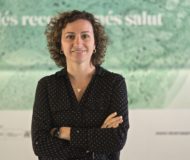
Dr. Sònia Sirisi Dolcet, a researcher in the Neurobiology of Dementia group at the Institut de Recerca Sant Pau (IR Sant Pau), has been awarded a grant from the José Castillejo international mobility program, promoted by the Ministry of Science, Innovation, and Universities. This program funds research stays at leading international institutions with the aim of strengthening researchers’ training and international projection.
The grant allows the researcher to carry out her project at the University of Pennsylvania in the United States, one of the leading international centers in the study of neurodegenerative diseases. The three-month stay will take place at the Perelman School of Medicine, in the laboratory led by Dr. David Irwin, a specialist in neuropathology.
During this period, Dr. Sirisi will work on the characterization of new monoclonal antibodies targeting a fragment of the amyloid precursor protein (APP), an emerging target in Alzheimer’s research. “This grant represents a key opportunity to advance a line of research that we are developing at IR Sant Pau and that may help better understand mechanisms that have so far been underexplored in Alzheimer’s disease,” explains the researcher.
Alzheimer’s disease is characterized by the accumulation of proteins such as amyloid-β and tau, considered the main neuropathological markers. However, recently, evidence has emerged pointing to the involvement of other mechanisms in neuronal dysfunction. In this context, the project focuses on the study of APP-derived fragments that may play a relevant role in the development of the disease.
The work will be based on the analysis of these antibodies in human brain tissue postmortem from different neurodegenerative conditions, including sporadic and genetic Alzheimer’s disease, as well as other tauopathies. The aim is to identify specific patterns of accumulation of these fragments and to study their relationship with key disease processes, such as amyloid deposition, tau pathology, and neuroinflammation. “Studying these antibodies in new cohorts will allow us to validate whether the pattern observed so far is reproduced across different neuropathological contexts and to advance our understanding of their role in disease progression,” adds Dr. Sònia Sirisi.
This approach will make it possible to assess the potential of these antibodies both as research tools and as possible therapeutic targets. All of this comes in a context where, despite recent advances in amyloid-targeting treatments, there remains a need to develop more effective strategies to modify the course of the disease.
The collaboration between IR Sant Pau and the University of Pennsylvania team is part of a well-established line of work between both groups, which have already collaborated on several studies in the field of Alzheimer’s disease and frontotemporal dementia. This new stay strengthens this international cooperation and opens the door to future joint research lines in the field of neurodegenerative diseases.

