
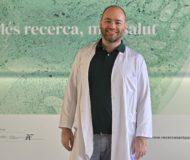
Despite advances lately, sepsis remains one of the leading causes of mortality worldwide, and its management faces significant clinical and scientific limitations. In this context, The Lancet has launched a new international commission that is now beginning its work and includes the participation of Dr. Otavio Ranzani, researcher at the Institut de Recerca Sant Pau (IR Sant Pau) and head of the SalutData Lab—Data and Health Laboratory.
Sepsis is a severe clinical syndrome that occurs when the body’s response to an infection becomes dysregulated, leading to organ dysfunction. This syndrome continues to represent a major global health problem, both because of its high mortality and the challenges associated with its diagnosis and treatment across different healthcare settings.
“Sepsis requires a shift in approach that goes beyond traditional models and allows for better integration of biological research, clinical practice, and healthcare system organization,” says Dr. Otavio Ranzani. “Only with a more global and coordinated perspective will it be possible to advance in its prevention, diagnosis, and treatment.”
The commission has been publicly introduced with the publication in The Lancet of its first article, a programmatic paper that marks the beginning of its work and establishes the foundations for developing an international agenda in the coming years. This initial document identifies the main outstanding challenges in the global management of sepsis and defines the commission’s priority areas of work.
One of the main challenges identified is the lack of consensus on definitions and surveillance criteria at the global level, resulting in highly variable estimates of incidence. This situation highlights the need to establish standardized definitions that enable better measurement of the burden of this syndrome and facilitate comparisons across studies.
In addition, the absence of globally validated diagnostic tools remains a major limitation. In practice, this implies reliance on microbiological testing ranging from culture-based methods to pathogen sequencing techniques, along with inflammatory biomarkers such as procalcitonin, C-reactive protein, or cytokines. These tools show context-dependent diagnostic performance, uneven availability across countries, and, often, limitations related to cost and access to diagnostic services, making accurate identification and reliable epidemiological estimates difficult.
“The challenge is not only to improve the available tools but to rethink how we understand sepsis as a complex clinical process,” says Dr. Otavio Ranzani. “Without this shift in perspective, it will be difficult to move toward more precise models that allow diagnosis and treatment to be tailored to each patient.”
Furthermore, although biological and clinical heterogeneity is recognized, scientific advances remain limited. Despite the development of innovative clinical trials, there is still a lack of evidence for effective immunomodulatory therapies that improve survival. This is partly because studies continue to focus on individual mediators, whereas clinical outcomes depend on multiple interrelated biological mechanisms that, in numerous instances, are not yet fully understood.
In this context, the commission led by The Lancet aims to carry out a systematic evaluation of epidemiology and of the clinical, biological, and health system factors that shape its management. It aims to identify the main current limitations and propose solutions on a global scale.
The initiative recommends the development of a comprehensive framework covering the entire continuum, from infection prevention and early detection across all levels of care to patient treatment and follow-up, adapted to differences between healthcare systems. It also explicitly incorporates the long-term impact, an area that remains underexplored despite its clinical relevance, and addresses the interaction between sepsis, patients’ prior health status, and socioeconomic factors, which influence both risk and outcomes.
“This work seeks to lay the groundwork for better evidence-based decision-making, both in clinical practice and public health,” adds Dr. Otavio Ranzani. “Advancing in this field requires integrating clinical, biological, and health system data.”
The commission will carry out its work over the coming years with the goal of generating recommendations and publications that help guide the management of this syndrome at the international level. In this framework, the participation of IR Sant Pau places the institution within a leading international initiative at a key moment in defining its lines of work, with Dr. Otavio Ranzani contributing to the analysis of epidemiology and the identification of major challenges in its management.
Shankar-Hari M, Ming D, Mendelson M, Rupali P, Adhikari NKJ, Ranzani O, Randolph A, Davenport E, van der Poll T, Moita LF, Beane A, Lamontagne F, Kwizera A, Holmes A, Diaz J. The Lancet Commission on Sepsis: transforming sepsis care and outcomes. Lancet 2026. https://doi.org/10.1016/s0140-6736(26)00648-3

