
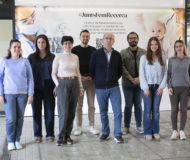
A study led by the Sant Pau Research Institute (IR Sant Pau) and the CIBER of Cardiovascular Diseases (CIBERCV) has identified a new protective mechanism involved in the development of abdominal aortic aneurysm (AAA), a serious cardiovascular disease for which there are currently no effective pharmacological treatments to halt its progression. The findings, resulting from collaboration between several CIBERCV groups and the Obesity and Nutrition area (CIBEROBN), have been published in British Journal of Pharmacology.
Extracellular matrix remodeling is a key process in abdominal aortic aneurysm (AAA); however, the key matrix components that regulate vascular integrity and remodeling processes remain poorly understood. In this context, the research team identified the extracellular matrix protein thrombospondin-4 (TSP4) as a key factor in the development of the disease.
“Abdominal aortic aneurysm is a silent and potentially lethal disease for which only surgical treatment is currently available in advanced stages. Identifying factors such as TSP4, which help limit vascular damage, is essential to move toward effective pharmacological therapies,” says Dr. Cristina Rodríguez, researcher at IR Sant Pau and CIBERCV and coordinator of the study.
“In a large cohort of patients and donors, as well as in mouse models, we have demonstrated that TSP4 is activated early and persistently during aneurysm development,” explains Dr. José Martínez González, group leader at CIBERCV at the Institute for Biomedical Research of Barcelona-CSIC and co–principal investigator of the study together with Dr. Rodríguez Sinovas.
“We confirmed a significant increase in THBS4 gene mRNA levels and TSP4 protein in the aorta in AAA, and observed that THBS4 is overexpressed early in pre-aneurysmal lesions,” notes Dr. Rodríguez. In addition, the team observed that inhibition of this protein accelerates disease progression, increasing inflammation and vascular damage.
The team states that thrombospondin-4 is not simply a marker of the pathological process, but rather plays an active and protective role in maintaining vascular wall stability. The coordinators conclude that the findings reveal the protective role of TSP4 and suggest that its modulation could represent a new therapeutic strategy to improve vascular wall stability in AAA.
Thrombospondin-4 is upregulated in abdominal aortic aneurysm: A vasoprotective response with potential therapeutic relevance. Laia Blanco-Casoliva, Lidia Puertas-Umbert, Judith Alonso, Rafael Almendra-Pegueros, Saray Varona, Mercedes Camacho, Gemma Arderiu, Lluís Asmarats, Marta Alegret, Jose Martínez-González, Cristina Rodríguez. https://doi.org/10.1111/bph.70402

