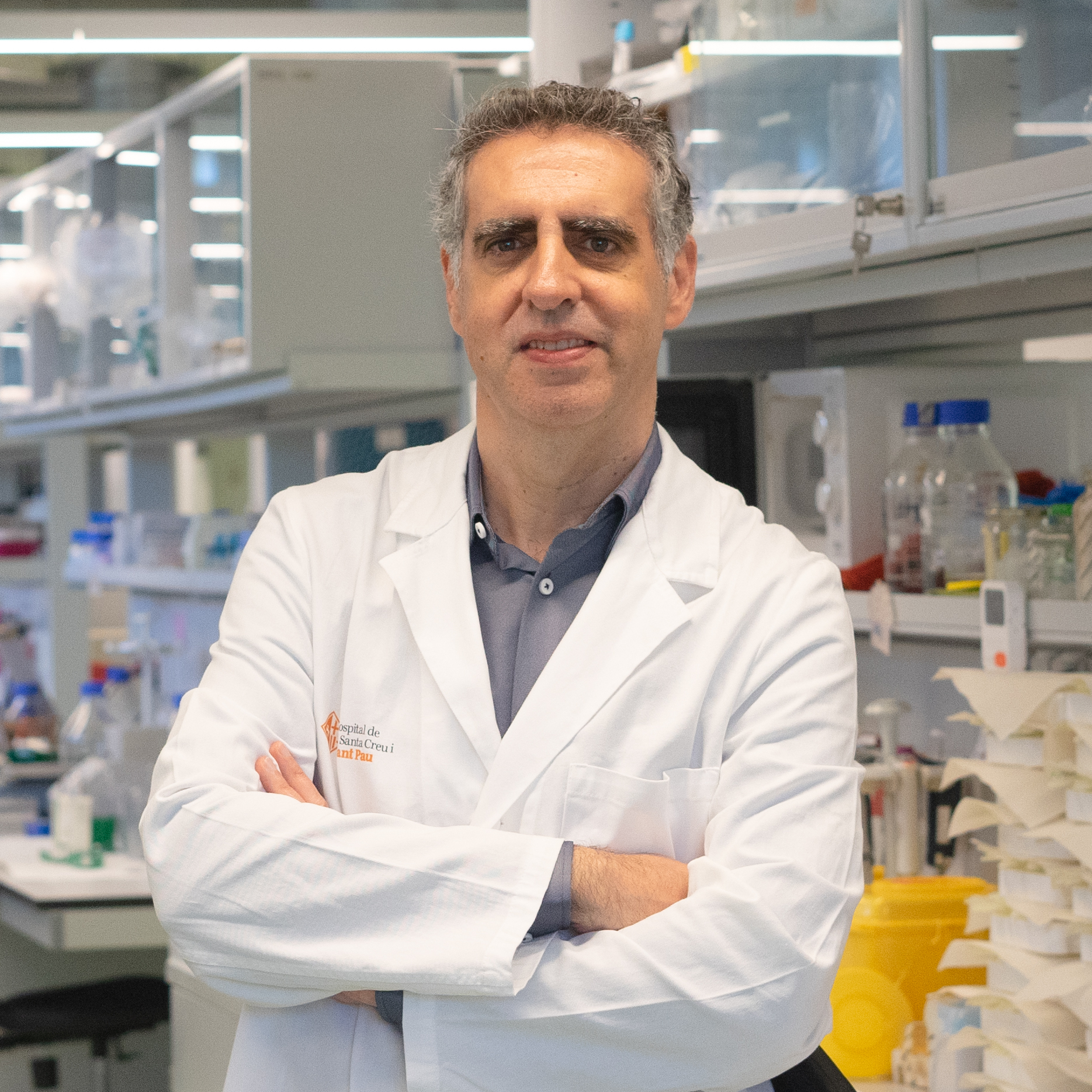
The group focuses its research on the establishment of epigenomic and epitranscriptomic maps for normal and transformed cells, on the study of interactions between epigenetic modifications and non-coding RNAs, and on the development of new epigenetic drugs for cancer treatment.
The research plan for the coming years will expand and innovate upon the group’s previous key contributions in the fields of Epigenetics and Epitranscriptomics, both at the basic and translational levels. It will address the identity of organs, tissues, and cells, and how these characteristics become deregulated in disease, with a primary focus on cancer.
The group focuses its research on the establishment of epigenomic and epitranscriptomic maps for normal and transformed cells, on the study of interactions between epigenetic modifications and non-coding RNAs, and on the development of new epigenetic drugs for cancer treatment.
The research plan for the coming years will expand and innovate upon the group’s previous key contributions in the fields of Epigenetics and Epitranscriptomics, both at the basic and translational levels. It will address the identity of organs, tissues, and cells, and how these characteristics become deregulated in disease, with a primary focus on cancer.