
More than 90% of people with Down syndrome will develop symptoms of Alzheimer’s disease during their lifetime. And when epilepsy is added to that diagnosis, decline accelerates significantly. The LESS-AD study is a clinical trial jointly promoted by the Sant Pau Alzheimer Down Unit and IR Sant Pau to investigate whether preventing these epileptic seizures with a drug can slow disease progression. The trial is currently in the recruitment phase.
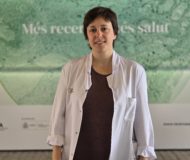
“Down syndrome involves a very significant genetic burden that determines the development of Alzheimer’s disease, and we have known this for some time. The appearance of epileptic seizures over the course of the disease is common and worsens its progression. What we are asking is whether, by acting before epileptic seizures appear, we can also slow the progression of Alzheimer’s disease,” explains Dr. María Carmona-Iragui, a researcher in the Neurobiology of Dementias group at IR Sant Pau and at the Sant Pau Memory Unit, who leads the study. “We are increasingly understanding how the disease progresses in this population, and this allows us to identify moments when an intervention could make a difference.”
The link between Down syndrome and Alzheimer’s disease has a well-established biological explanation: the triplication of chromosome 21 causes an overproduction of beta-amyloid protein, making this population vulnerable to the disease. However, the course of Alzheimer’s disease is not always the same. In many cases, epileptic seizures also appear over time—between 50% and 80% of people with Down syndrome and Alzheimer’s disease will develop them at some point—and when this occurs, cognitive and functional decline accelerates compared to those who do not experience seizures. This condition even has its own name: LOMEDS (Late-Onset Myoclonic Epilepsy in Down Syndrome), a late-onset form of epilepsy with distinct electroclinical features that is closely linked to Alzheimer’s progression in this population.
Despite the severity of this condition, people with Down syndrome have historically been underrepresented in clinical research. The complexity of working with this population—which requires specific adaptations in study design and close involvement of families and caregivers—has meant that many relevant questions remain unanswered. “We know a great deal about how the disease evolves in this population, but for too long this has not translated into clinical trials that seek real solutions,” notes Dr. Carmona-Iragui. “This study is a commitment to changing that.”
The LESS-AD study is based on a novel therapeutic hypothesis: administering levetiracetam preventively, before the first epileptic seizure occurs, could not only reduce the risk of seizures but also help slow the progression of Alzheimer’s disease in this population. Levetiracetam is an antiepileptic drug widely used in clinical practice, with decades of experience and a well-established safety profile, making its evaluation in a preventive context feasible.
Participants in the trial will receive levetiracetam or placebo tablets for 96 weeks. Throughout the study, periodic clinical assessments will be conducted, including medical examinations, laboratory tests, brain magnetic resonance imaging, electroencephalography, and memory and cognitive function tests.
The trial is open to adults with Down syndrome who have already shown early symptoms of Alzheimer’s disease but have not experienced any epileptic seizures. It is precisely within this window—after the onset of initial cognitive symptoms and before the first seizures occur—that the research team believes the greatest opportunity for intervention may exist. Participants must have a caregiver with daily contact who can accompany them to follow-up visits, which take place every six months at several centers in Spain: Barcelona, Madrid, Donostia, Santander, and Granada.
The LESS-AD study is an academic-initiated trial, without funding or sponsorship from the pharmaceutical industry, highlighting IR Sant Pau’s commitment to independent research in the service of patients. This type of study is particularly relevant in the context of Down syndrome, a population historically underrepresented in clinical drug trials despite the high prevalence of serious comorbidities such as Alzheimer’s disease.
The IR Sant Pau Alzheimer Down Unit, created in 2014 in collaboration with the Catalan Down Syndrome Foundation, is a pioneering clinical care and research unit worldwide in the care of adults with Down syndrome and Alzheimer’s disease. It is also the only unit of its kind in Spain, recognized by the Government of Catalonia as a reference unit in Catalonia for neurological conditions associated with Down syndrome. In addition, the Sant Pau Memory Unit has recently been designated by the Spanish Ministry of Health as a CSUR center—Center, Service, and Unit of Reference of the National Health System—for rare diseases associated with cognitive disorders.
IR Sant Pau’s leadership in this field has led to the development of one of the most important international reference cohorts for the study of Alzheimer’s disease in Down syndrome: the DABNI project (Down Alzheimer Barcelona Neuroimaging Initiative), which has enabled the publication of relevant findings in leading journals such as The Lancet and Brain.

