
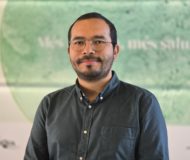
The Sant Pau Research Institute (IR Sant Pau) has been awarded a mobility grant under the Strategic Action in Health (AES) program, in its research staff mobility modality (M-AES), corresponding to the 2025 call, granted by the Instituto de Salud Carlos III (ISCIII). These grants aim to promote the advanced training of research staff through stays at leading international centers.
The grant has been awarded to Rafael Antonio Almendra-Pegueros, a predoctoral researcher who currently holds an active PFIS contract (Predoctoral Training in Health Research). As part of this mobility program, he will undertake a two-month stay at the :contentReference[oaicite:0]{index=0} (United Kingdom) from February 3 to April 3, 2026, with the aim of acquiring new technical and methodological skills to strengthen his research line at IR Sant Pau.
During the stay, the research project will focus on the identification of new therapeutic targets in aortic aneurysms, a severe cardiovascular condition for which there are currently no effective pharmacological treatments. The research is structured around two main scientific objectives.
On the one hand, the study will address abdominal aortic aneurysm (AAA) through in situ validation of differentially expressed genes previously identified in patients. At the University of Cambridge, advanced technologies such as RNAscope and imaging mass cytometry will be applied, enabling the analysis of multiple molecular markers in histological sections. These techniques will be used to validate genes related to processes such as endoplasmic reticulum stress, mitochondrial function, and inflammation, which are involved in AAA progression.
On the other hand, the research will focus on identifying new therapeutic targets to slow the progression of ascending thoracic aortic aneurysm (ATAA). In this case, different patient subgroups will be analyzed, including sporadic cases, patients with genetic syndromes such as Marfan or Loeys-Dietz syndrome, and patients with a bicuspid aortic valve. The work will combine transcriptomic analyses, qPCR techniques, protein panels, and functional validation studies to characterize the molecular mechanisms specific to each subgroup.
This line of research may contribute to the identification of prognostic biomarkers that could improve risk stratification, identify patients with a higher likelihood of aneurysm progression or rupture, and optimize surgical decision-making in clinical practice.
Once the stay is completed, the knowledge and techniques acquired will be integrated at IR Sant Pau. The project is embedded within the research lines of the Regulatory Mechanisms of Cardiovascular Remodeling group, coordinated by Dr. Cristina Rodríguez, and the Cardiovascular Biochemistry group, coordinated by Dr. José Luis Sánchez Quesada. These groups have the necessary equipment to continue the experimental work and broad access to human samples through collaboration with the Hospital de Sant Pau, the Banc de Sang i Teixits, and several clinical groups specialized in aortic pathology.
The research profile of Rafael Antonio Almendra-Pegueros, with a solid predoctoral track record and sustained scientific activity in the field of aneurysm pathophysiology, reinforces the value of this stay as a strategic training opportunity. It is also a source of scientific return for IR Sant Pau.

