
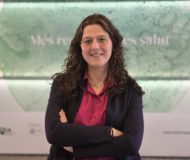
Maria Antentas, a nutritionist and predoctoral researcher in the Endocrinology, Diabetes, and Nutrition research group at the Sant Pau Research Institute (IR Sant Pau), has been awarded a FI-STEP 2025 predoctoral grant, granted by the Agency for Management of University and Research Grants (AGAUR). This was the only grant awarded to IR Sant Pau in this call. Thanks to this funding, the researcher will carry out her doctoral thesis over a period of three years under the supervision of Dr. Dídac Mauricio and Dr. Marina Idalia Rojo López.
The FI-STEP grants aim to promote the training of predoctoral researchers by supporting the hiring of young researchers so they can carry out their doctoral thesis in strategic areas defined by the European Union. Through this program, the goal is to strengthen the scientific and technological capacity of the research system by promoting high value-added projects with potential social, economic, and scientific impact.
Maria Antentas’s research project focuses on the study of lipid metabolism and dietary fatty acid intake, as well as the full set of lipids present in the body, including the lipidome and the advanced lipoprotein profile. The main objective is to deepen the understanding of how these lipid profiles are associated with the risk of developing liver diseases such as steatosis and liver fibrosis, especially in people with type 1 and type 2 diabetes. This also occurs in individuals without diabetes.
The research will incorporate a gender perspective and will analyze potential differences between men and women regarding lipid metabolism, diet, and the risk of liver involvement. Using advanced lipidomics, bioinformatics, and lipoprotein profile analysis techniques, the project aims to further identify possible noninvasive biomarkers associated with the risk of liver disease linked to metabolic dysfunction.
The results of this project could help improve understanding of the mechanisms involved in liver disease associated with diabetes and reinforce the role of nutrition and personalized dietary approaches as key tools for its prevention and management. In addition, the research aligns with European priorities in the fields of biotechnology and bioinformatics and reinforces IR Sant Pau’s commitment to biomedical research of excellence with clinical and social impact.

