
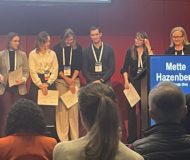
Irene Pascual-Latorre, a predoctoral researcher in the Cellular Immunotherapy and Gene Therapy group at the Institut de Recerca Sant Pau (IR Sant Pau) and the Hematology Department at Hospital de Sant Pau, was recognized with the award for one of the Best Young Poster Abstracts at the annual congress of the European Society for Blood and Marrow Transplantation (EBMT). The congress was held in Madrid from March 22 to 25, 2026. The work highlighted an innovative strategy to improve the efficacy of CAR-T therapies through pharmacological modulation during their ex vivo production, in a key research area for the development of more effective cellular therapies.
“Optimizing the characteristics of the CAR-T product is a key aspect in improving clinical outcomes. This work provides new approaches to modulate this process during its generation,” explains Irene Pascual-Latorre.
CAR-T therapies have represented a significant advance in the treatment of hematologic malignancies, although important challenges remain regarding the durability of response. In this context, the composition of the infused cellular product emerges as a determining factor, particularly the proportion of T cells with a stem memory phenotype (TSCM), which is associated with greater expansion capacity and long-term persistence. Improving this cellular profile is therefore one of the most active strategies in the field.
The study focused on increasing this population through modulation of molecular signaling pathways involved in T-cell differentiation and expansion. Specifically, it analyzed the impact of PI3K and CBP/p300 inhibition during the ex vivo expansion of CAR-T cells targeting CD30 and CD19, with the aim of optimizing the functional characteristics of the final product.
To this end, the team used T cells from patients with relapsed or refractory lymphomas, which were genetically modified to express CAR30 or CAR19. During the cell expansion process, different pharmacological treatments were applied—a PI3K inhibitor, a CBP/p300 inhibitor, and a combination of both—along with a control condition without treatment. Throughout the process, key parameters in CAR-T cells were evaluated, including cell viability, expansion capacity, the proportion of TSCM cells, and antitumor activity against tumor cell lines.
“We have analyzed how different pharmacological interventions during ex vivo expansion can influence the balance between differentiation and proliferative capacity of CAR-T cells. These types of approaches allow for more precise tuning of the characteristics of the final product,” Pascual-Latorre notes.
The results indicated that pharmacological modulation improved key characteristics of CAR-T products. PI3K inhibition promoted enrichment in TSCM cells in CAR30-T cells, although with some impact on cytotoxic activity at higher doses. Meanwhile, CBP/p300 inhibition increased cell expansion capacity without affecting CAR30-T subpopulation differentiation or antitumor function.
The combination of both inhibitors achieved a balance between enhanced cell expansion and increased TSCM phenotype without compromising short-term efficacy against tumor cells. In CAR19-T cells, CBP/p300 inhibition also improved expansion without inducing cellular differentiation or loss of antitumor activity, reinforcing the consistency of the findings across different experimental settings.
The study concluded that targeted pharmacological inhibition during ex vivo production may help generate CAR-T products with greater therapeutic potential by optimizing their cellular composition and functionality. This approach is particularly relevant in the development of new strategies for patients with refractory disease, where incremental improvements in these therapies may have a significant clinical impact.
“Although these are preclinical results, the data provide a solid foundation for further exploring strategies to improve the efficacy of CAR-T therapies in the clinical setting,” Pascual-Latorre concludes.
The recognition received at the EBMT congress highlighted both the scientific quality of the work and its potential impact in the field of cellular immunotherapy, reinforcing the role of IR Sant Pau in the development of advanced therapies in hematology.

