Institut de Recerca Sant Pau - Centre CERCA



Reducing the damage sustained by the heart during a myocardial infarction remains one of the major challenges in cardiology, even when the coronary artery can be reopened in time. Part of the myocardial injury remains difficult to prevent despite advances in reperfusion. In the search for strategies to limit this damage, a study led by the Institut de Recerca Sant Pau (IR Sant Pau), published in the European Heart Journal, shows that intravenous administration of atorvastatin during the ischemic event itself may improve cardioprotection compared with the administration of an oral loading dose before myocardial infarction.
Comparing multiple healthcare interventions and deciding which is most appropriate for patients is one of the most complex challenges in the development of clinical practice guidelines. An article published in Annals of Internal Medicine, led by researchers from the Evidence Synthesis Unit at the Sant Pau Research Institute (IR Sant Pau), presents an update to the Evidence-to-Decision Framework (EtD Framework), a methodological tool designed to support decision-making by guideline development panels when multiple therapeutic options are available.
The EtD Framework is part of the GRADE (Grading of Recommendations Assessment, Development, and Evaluation) system, the international methodological standard used to develop evidence-based clinical practice guidelines. This approach structures the process through which expert panels integrate findings from scientific research with other relevant factors, such as patient values and preferences, resource use, equity, and implementation feasibility, when formulating recommendations.
The work was developed by an international group of experts from the GRADE Working Group, under the leadership of researchers from IR Sant Pau. Dr. Pablo Alonso, Head of the Clinical Epidemiology and Health Services Research Group at IR Sant Pau, is the lead and corresponding author of the article. “This work provides clear methodological guidance for addressing one of the most complex challenges in guideline development: comparing multiple interventions and determining which option is most appropriate for patients,” explains Dr. Pablo Alonso. “This framework, previously published by our group, had already become the international standard for formulating evidence-based recommendations, and with this update we expand its ability to address more complex clinical questions.”
In clinical practice, choosing a treatment depends on more than its effectiveness alone. Factors such as potential adverse effects, required resources, patient preferences, and ease of implementation across different healthcare systems also play an important role. This challenge is particularly relevant when multiple therapeutic alternatives exist, a situation that is becoming increasingly common in both clinical practice and public health.
Although tools such as network meta-analyses allow multiple interventions to be compared within a single analysis, they do not by themselves determine which option is preferable because they do not fully integrate all the factors involved in decision-making. To address this limitation, the new model expands the EtD Framework, enabling expert panels to evaluate multiple options simultaneously while integrating scientific evidence with other criteria relevant to clinical practice.
Among its main contributions is the incorporation of the concept of “net effect,” which summarizes the balance between the benefits and risks of each intervention and facilitates more transparent comparisons among alternatives. In addition, it introduces tools that allow options to be ranked according to their degree of preference, considering factors such as the magnitude of effects, the certainty of the evidence, and resource use. This contributes to the development of clearer and more consistent recommendations.
“Healthcare decisions are complex and cannot be based on a single criterion,” notes Dr. Alonso. “This approach integrates all relevant factors and makes explicit the rationale behind each recommendation.”
Clinical practice guidelines are essential tools that inform medical practice and public health decision-making. Their development involves translating scientific evidence into clear and actionable recommendations, a process that must be rigorous, transparent, and consistent across different settings.
The new EtD Framework helps improve this process by making recommendations more consistent, comparable, and applicable across different healthcare systems. To achieve this, the model proposes defining in advance which outcomes are most important to patients and what magnitude of effect should be considered meaningful. This helps prevent biased interpretations and strengthens transparency in decision-making.
“Clinical practice guidelines must help address complex decisions in situations where several alternatives are available,” explains Jessica Beltrán, first author of the study. “This framework provides a systematic way to analyze all available information and to make explicit the criteria underlying each decision.”
The work was developed by the GRADE Working Group under the leadership of the Evidence Synthesis Unit. This further strengthens the role of IR Sant Pau as one of the international leaders in methodology for the development of evidence-based clinical practice guidelines.
“At the Evidence Synthesis Unit, we have spent years contributing to the development of GRADE methods and collaborating with international organizations that produce clinical practice guidelines and public health recommendations,” explains Dr. Alonso. “Our goal is to improve the way scientific evidence is translated into decisions that affect clinical practice and people’s health.”
The Evidence Synthesis Unit actively participates in international initiatives aimed at improving the methodological quality of healthcare recommendations. It has also contributed to the development of the international GRADE handbook, which is used by organizations and scientific societies worldwide, as well as the guideline manuals of Spain’s National Health System Guideline Program. Reflecting its track record and impact, the unit participated in three additional GRADE methodological developments over the past year, all of which were also published in Annals of Internal Medicine.
In practice, methodological advances of this kind have a direct impact on how clinical recommendations are developed to guide healthcare delivery. By facilitating rigorous comparisons among multiple therapeutic alternatives, the new EtD Framework can help ensure that clinical practice guidelines better reflect the available scientific evidence and support healthcare professionals in making more informed decisions for patients.
A type of omega-3 fatty acid found in oily fish, used as a medication to lower triglycerides, may directly protect the heart after a heart attack. A study led by the Research Institute of Sant Pau (IR Sant Pau) shows that the eicosapentaenoic acid ethyl ester (EPA-E) reduces cardiac damage through mechanisms that go beyond its effect on blood lipids. The study, published in the journal European Heart Journal, shows that this compound not only improves the lipid profile but also acts directly on injured cardiac tissue, modulating key processes such as inflammation, cellular metabolism, and oxidative stress. All of which are critical in the progression of myocardial infarction.
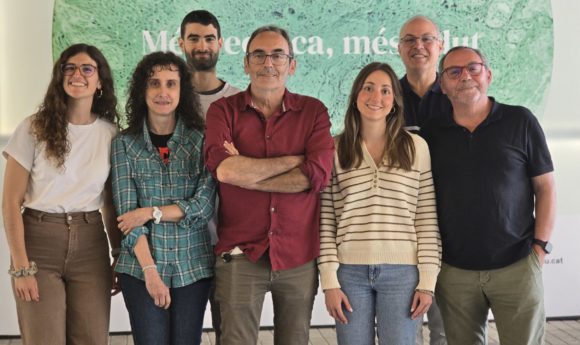
People with type 1 diabetes continue to face an elevated risk of cardiovascular disease even when they maintain good glycemic control and apparently normal cholesterol levels. This phenomenon, known as residual cardiovascular risk, calls into question the ability of routine blood tests to reflect actual risk and points to the existence of more complex alterations in the types of particles that transport cholesterol in the bloodstream. A study led by researchers from the Institut de Recerca Sant Pau (IR Sant Pau), Hospital de Sant Pau, and CIBERDEM, published in the journal Frontiers in Endocrinology, shows that these patients have increased levels of small dense low-density lipoproteins (sdLDL), a type of LDL cholesterol made up of smaller particles that accumulate more easily within arterial walls. This finding provides a mechanistic explanation for this residual cardiovascular risk and reinforces the need to go beyond standard cholesterol measurements.

The lack of reliable biomarkers capable of anticipating corticosteroid response remains one of the major challenges in the management of alcohol-associated hepatitis. In this setting, a team from the Sant Pau Research Institute (IR Sant Pau) has identified a specific profile of circulating plasma extracellular vesicles (EVs) associated both with treatment response and with medium- and long-term mortality. The study findings, published in the International Journal of Molecular Sciences, highlight the potential of these EVs as non-invasive biomarkers to improve prognostic stratification and support clinical decision-making in a disease associated with high mortality.