
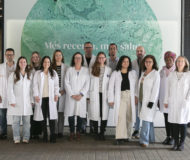
The Sant Pau Research Institute (IR Sant Pau) has received funding from the national “Proof of Concept Projects 2025” call, promoted by the Ministry of Science, Innovation, and Universities through the State Research Agency (AEI), to advance the development of Fanconinib, the first specific inhibitor designed to block the FA/BRCA DNA repair pathway. This is an emerging target in precision oncology with high therapeutic potential. The project, led by Dr. Jordi Surrallés, head of the DNA Repair Syndromes and Cancer Predisposition group, has been awarded a total of €278,300.
Many widely used antitumor drugs, such as cisplatin, act by inducing a type of damage that is particularly toxic to tumor cells: DNA interstrand crosslinks. The FA/BRCA pathway plays an essential role in repairing this type of damage. Its activation is closely associated with chemotherapy resistance in several tumors, whereas its selective inhibition may provide a more targeted and less toxic alternative to current treatments. In addition, this pathway is involved in synthetic lethality interactions, a phenomenon whereby two alterations that are not lethal on their own become lethal when they coexist. In oncology, synthetic lethality occurs when a cancer cell carrying a specific mutation loses its ability to survive if a second compensatory gene or pathway is inhibited. In the context of cancer, this means that tumors harboring mutations in various genes critically depend on the FA/BRCA repair pathway for survival; blocking it may selectively eliminate these vulnerable tumor cells without affecting healthy tissue, opening the door to highly specific therapies with fewer side effects.
Lately, Dr. Surrallés’ team has identified and optimized various chemical compounds capable of blocking the FA/BRCA DNA repair pathway. These molecules reproduce a phenotype similar to that observed in cells from patients with Fanconi anemia: chromosomal fragility, increased sensitivity to cisplatin, and particularly high toxicity in tumor cells carrying mutations in synthetic lethal genes, confirming their potential as targeted therapies.
With this new funding, IR Sant Pau will carry out a decisive phase in the project’s development. The team will further optimize the molecules, generate mutant cell lines in synthetic lethal genes using CRISPR/Cas9, and validate the inhibitor’s efficacy in both cellular tumor models and immunodeficient mice bearing patient-derived tumors (PDX). These studies will enable the selection of the most promising compounds and the preparation of patent protection in collaboration between IR Sant Pau and the Universitat Autònoma de Barcelona (UAB).
For Dr. Surrallés, this project represents a step forward in precision therapies. “We have been studying the FA/BRCA pathway for years, and we are now in a position to develop the first specific inhibitor of this route. Validating Fanconinib would allow us to open a new therapeutic avenue for resistant tumors with limited treatment options.” Dr. Surrallés also highlights IR Sant Pau’s translational focus. “Our experience in bringing discoveries from the laboratory to the clinic, including international clinical trials and orphan drug designations from the European Medicines Agency, demonstrates that we are capable of delivering innovation to patients. We want Fanconinib to follow that same path.”
The potential impact is significant. It is estimated that more than 300,000 patients annually in Europe and the United States harbor mutations associated with synthetic lethality of the FA/BRCA pathway. In addition, other patients may benefit from increased chemotherapy sensitivity or from combination strategies with immunotherapy. Growing interest from several pharmaceutical companies in therapies targeting DNA repair pathways further reinforces the project’s clinical and industrial appeal.
With this funding, IR Sant Pau strengthens its position as an international reference center in the study of DNA repair mechanisms and the development of new therapeutic strategies, reinforcing the institution’s commitment to biomedical innovation and progress in cancer treatment.

