
Autism spectrum disorder (ASD) is a lifelong neurodevelopmental condition, but to date, approaches have focused primarily on childhood. As a result, many adults lack the tools to face key challenges such as employment and social integration, which also increases the risk of mental health problems in adulthood. To address this gap, the Institut de Recerca Sant Pau (IR Sant Pau) is participating in the Aut-CARE project (Autism Cognitive-Affective REmediation for adults), aimed at improving not only access to work but also long-term job retention.
Developed in collaboration with the Friends Foundation and supported by the ”la Caixa” Foundation Connecta Call, the initiative focuses on the co-creation of an intervention program for young people and adults with ASD, with the goal of addressing both barriers to employment access and the challenges associated with maintaining employment over time. The project is based on a participatory approach that incorporates the direct experience of people with autism to adapt interventions to their real needs.
The magnitude of this issue is clearly reflected in the data. According to Autism Europe, between 76% and 90% of adults with ASD are unemployed, making this group the one with the highest unemployment rate among people with disabilities. Although organizations such as the Spanish Autism Confederation have identified labor market inclusion as a priority, barriers to access persist, largely due to the lack of evidence-based interventions tailored to the specific cognitive and emotional needs of autism, as well as the presence of generalist programs that do not address these characteristics.
During its first phase, the research team conducted an in-depth analysis of the socio-occupational situation of individuals aged 16 to 30 diagnosed with ASD, as well as their cognitive and emotional profile. This work led to the development of a comprehensive report of nearly 100 pages, which served as the foundation for guiding the next stage of the project.
“The first phase has allowed us to gain a very detailed understanding of the real difficulties these individuals face in their daily lives, both in the emotional domain and in executive functions, and how these directly impact their employment trajectories,” explains Maria Portella, head of the Mental Health Research Group at IR Sant Pau and one of the project leads.
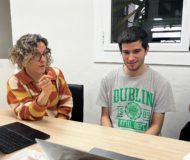
Based on these findings, the team developed a second phase focused on the co-creation of the Aut-CARE program together with people with ASD. This participatory process, based on focus groups and qualitative analysis, made it possible to define key aspects such as the structure, content, and format of the intervention sessions.
One of the most relevant findings of the project is that difficulties are not limited to accessing employment but begin at this stage and intensify once a job is obtained. “Few people with autism manage to enter the labor market, and, in numerous instances, when they do, they face significant challenges in maintaining their position over time. This highlights the need to develop specific tools that support the entire process, not just access,” adds Maria Portella.
The resulting program, which includes group sessions focused on emotional regulation and cognitive skills training, will be implemented during the third phase of the project, scheduled before the summer. This stage allows its impact to be evaluated in a pilot study with participants.
From the Friends Foundation, a partner organization in the project, they highlight the value of this approach centered on real needs. “Co-creation with participants themselves has been key to ensuring that the solutions designed are truly useful and applicable in their daily lives,” says Susanna Díaz, director of the Friends Foundation.
The Aut-CARE project represents progress in the development of personalized interventions in the field of ASD, with an approach that integrates scientific evidence and the direct experience of users, aiming to tangibly improve their quality of life and social inclusion.

