
Lymph node metastases remain one of the main factors determining the prognosis of patients with high-risk cutaneous squamous cell carcinoma (cSCC). Detecting them early can change the therapeutic approach and improve disease control options. Now, a multicenter study published in JAMA Dermatology shows that imaging techniques, particularly lymph node ultrasound and computed tomography (CT), can identify these metastases with much greater sensitivity than conventional physical examination.
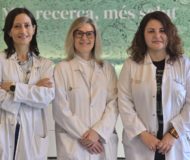
The study, led by Vall d’Hebron University Hospital, included the participation of researchers from the Institut de Recerca Sant Pau (IR Sant Pau), specifically the non-melanoma skin cancer committee team represented by Dr. Verónica Ruiz Salas, from the Dermatology Research Group, and Dr. Esther Granell Moreno and Dr. Sheila Alfonso Cerdán, from the Advanced Medical Imaging, Artificial Intelligence, and Image-Guided Therapy Research Group. The collaboration took place within the framework of the center’s multidisciplinary non-melanoma skin committee, which brings together different specialties for the diagnostic and therapeutic management of these complex skin tumors.
cSCC is the second most common type of skin cancer, and, although most cases have a favorable course, some tumors considered high-risk may develop lymph node metastases and significantly worsen prognosis. Early detection of lymph node involvement is particularly important because it can modify treatment and improve disease control.
To address this issue, the LACUNAS study prospectively evaluated 155 patients with high-risk cSCC using three different diagnostic strategies: physical examination, lymph node ultrasound, and contrast-enhanced neck CT. Researchers subsequently analyzed which technique best identified occult lymph node metastases and compared the performance of each according to the patients’ immune status.
The results indicated that both ultrasound and CT were clearly superior to conventional physical examination. Ultrasound achieved a sensitivity of 63.6% and CT 54.5%, compared with 8.3% for clinical examination. In addition, both imaging techniques showed very high agreement with each other, suggesting that they could be used in a complementary or interchangeable way depending on the clinical setting and available resources.
“The high agreement observed between ultrasound and CT demonstrates that both techniques can provide very useful information for early lymph node staging and help support more precise clinical decision-making,” says Dr. Esther Granell Moreno.
One of the most relevant findings of the study was the difference observed between immunocompetent and immunocompromised patients. In the former, both ultrasound and CT correctly detected all metastatic cases identified during follow-up. In contrast, among immunocompromised patients, diagnostic performance decreased substantially, and some metastases appeared rapidly despite negative initial test results.
The authors proposed that this behavior may reflect particularly aggressive and rapid tumor progression in immunocompromised patients, which would make early detection more difficult even with advanced imaging techniques. The study therefore highlighted the need to maintain close clinical follow-up, strengthen surveillance in this group of patients, and adapt diagnostic strategies according to risk profile and immune status.
“The fact that some metastases appeared within a very short time despite negative initial tests shows just how quickly these patients may progress and underscores the need not to relax clinical follow-up,” explains Dr. Verónica Ruiz Salas.
The study also highlighted several practical advantages of lymph node ultrasound, including the absence of radiation exposure, lower cost, and the possibility of performing immediate fine-needle aspiration if a suspicious lymph node is detected. These characteristics make it a particularly useful tool in older patients with comorbidities, a common situation in high-risk cSCC.
The researchers concluded that future clinical guidelines should incorporate differentiated recommendations according to the patient’s immune status, since current diagnostic strategies appear to be much less effective in immunocompromised individuals. The study findings therefore provide new evidence to optimize initial staging and clinical follow-up in this type of skin tumor.
“This work also highlights the need to continue developing more sensitive diagnostic strategies for higher-risk patients, especially in cases of immunosuppression,” adds Dr. Sheila Alfonso Cerdán.
Ferrándiz-Pulido C, Gómez-Tomás Á, Siurana S, Tortajada C, Salido-Vallejo R, Aguayo-Ortiz RS, Ribes Amorós I, Turrión-Merino L, Brea Álvarez B, Pérez González Í, Martí-Marti I, Medrano-Martorell S, Podlipnik S, Mollet J, Masferrer E, Lopez-Castillo D, Yébenes M, Corbacho-Monné M, Leal L, Solano-López A, Ruiz-Salas V, Granell-Moreno E, Alfonso-Cerdán S, Mendoza MD, Martínez-Domenech Á, Juárez-Dobjanschi C, Samaniego González E, Díaz P, Toll A. Diagnostic Modalities and Nodal Staging in High-Risk Cutaneous Squamous Cell Carcinoma. JAMA Dermatology. Published online April 22, 2026. https://doi.org/10.1001/jamadermatol.2026.0803

